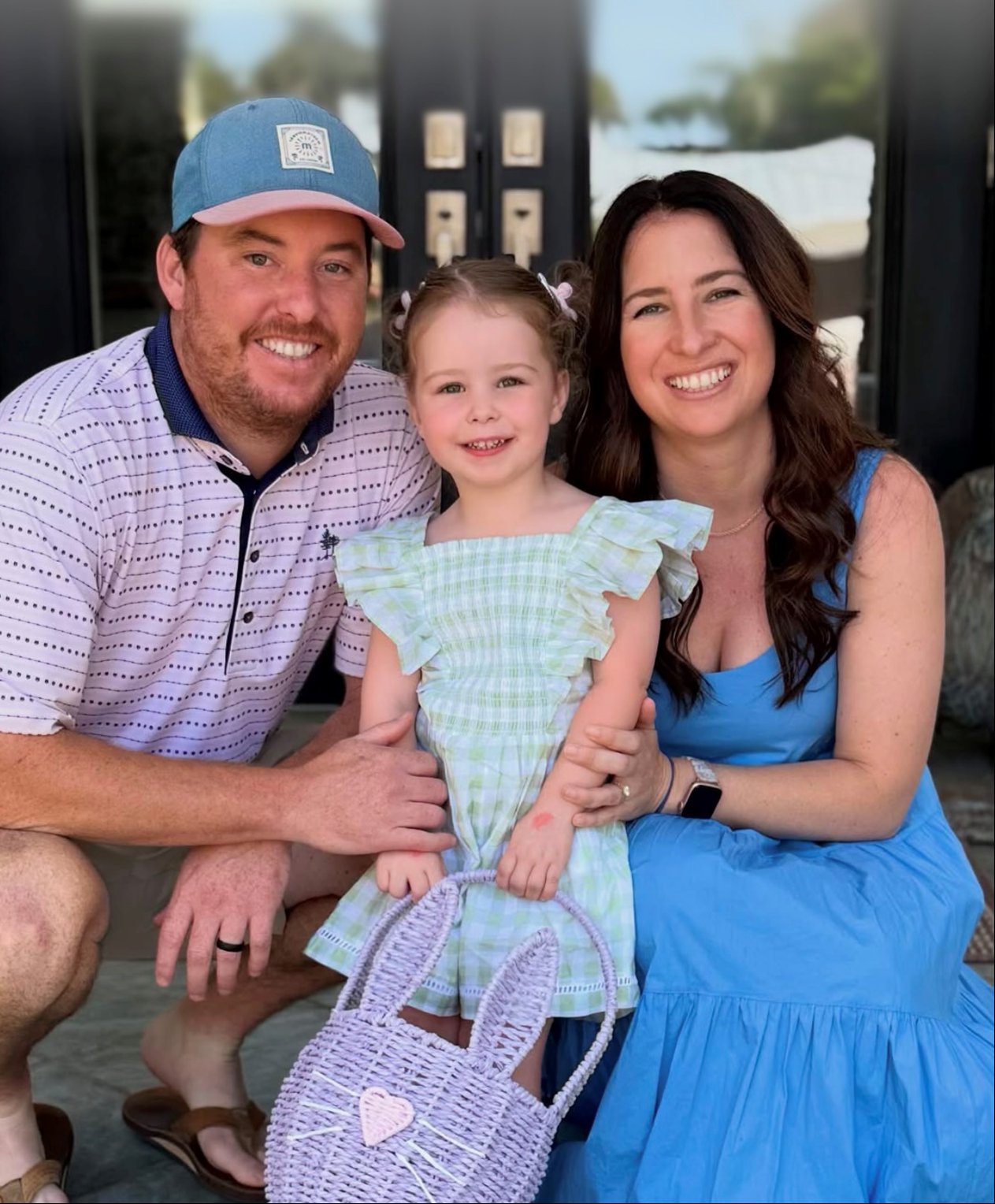
Justin, Sammi and Avery

A message from Justin

I'm not good at asking for help.
But here I am.

I'm Justin — a husband, dad, and the kind of guy who'd rather show up for others than ask for help himself. I have polycystic kidney disease and I need a kidney transplant. A living donor could give me my life back. If you've ever wanted to do something that truly matters, this could be it.

See if you can donate → Read my story
100K+ people waiting for a kidney transplant in the US right now
13 people die every day waiting for an organ transplant
3–5 yrs average wait time for a deceased donor kidney
Justin with his wife Sammi and daughter Avery
Justin, Sammi & Avery

How I got here — and why I'm asking for your help

My name is Justin. I'm a construction superintendent — the kind of guy who's most comfortable with a hard hat on and a project coming together around him. Outside of work, I'm a husband and a dad. My wife Sammi and our daughter Avery are my whole world, and our two dogs Layla and Zoe make sure there's never a quiet moment in the house. Golf and hockey are year-round constants for me — not just because I love the games, but because they keep me connected to friends I've had for years. And if I'm not on a job site or a course, I'm probably right where I want to be: with my family.

I've known for most of my life that Polycystic Kidney Disease, or PKD, was part of my story. PKD is a hereditary condition where clusters of cysts slowly grow on the kidneys over time, gradually reducing their ability to function. There's no cure — only management — and for many people, it quietly progresses for years before it becomes a crisis. I always knew a transplant would likely be in my future. I just didn't expect it to come this fast.

"I always knew a transplant would likely be in my future. I just didn't expect it to come this fast."

After months of testing and evaluation, we received incredible news — we had found a match, and felt confident we would soon be scheduling a transplant. Unfortunately, an unexpected setback closed that door. While the news was hard to take, we remain hopeful and are continuing our search for a living donor who can make that day possible.

I'm not sharing this to ask for sympathy. I'm sharing it because somewhere out there, there may be someone reading this who could be the reason I get to watch Avery grow up, keep showing up for Sammi, and get back to living the life I love.

What happens when you decide to help

You don't have to be a blood relative. You don't have to be a perfect biological match. You just have to be willing to find out if you could be the one.

01

Fill out the questionnaire

A short, confidential online form through Tampa General Hospital — available in English and Spanish. It takes about 15 minutes.

02

The team contacts you

If you pass the initial screening, Tampa General's Living Donor Team will reach out and walk you through next steps.

03

Medical evaluation

A thorough evaluation ensures donation is safe for you. Your health is the top priority — donors are fully protected throughout the process.

04

A second chance at life

A living-donor kidney often works immediately after surgery and can last significantly longer than one from a deceased donor.

🔄

Not a direct match? Paired donation may still make it possible.

In a paired kidney exchange, if you want to donate to Justin but aren't a compatible match, you can still help. Your kidney goes to another patient whose donor — in turn — is compatible with Justin. Everyone gets a kidney, and no willing donor goes to waste. Tampa General offers this program, and their team will walk you through whether it applies to your situation.

Do I need to be a blood relative? +
No. Tampa General has performed successful transplants from spouses, friends, coworkers, acquaintances, and even anonymous volunteers. Medical advances mean that biological relation is not required for an excellent outcome.
What blood types can donate? +
All blood types are welcome to complete the questionnaire. The medical team will determine compatibility — don't rule yourself out before you ask.
Is it safe to donate a kidney? +
People can live a full, healthy life with one kidney. Donors are rigorously evaluated beforehand to make sure donation is safe for them personally, and they receive lifetime follow-up care after surgery.
What does the surgery look like? +
Tampa General uses laparoscopic (minimally invasive) surgery, which means less pain and a faster recovery compared to traditional open surgery. Most donors go home within 2–3 days and return to normal activity within a few weeks.
What are the costs to me as a donor? +
Typically, the recipient's insurance covers the surgical and medical costs of living donation. Beyond that, DonorShield — the only comprehensive donor protection program in the US — can cover up to $2,000 per week in lost wages for up to 12 weeks, up to $6,000 in travel and lodging for you and a caregiver, and up to $30,000 total in donation-related expenses. It also includes life insurance, disability insurance, and legal support if you face any employment or insurance discrimination. No income information is required and no one is disqualified based on income. The National Living Donor Assistance Center (NLDAC) is an additional resource for donors who need further help with travel, lodging, and lost-wage expenses. Learn more at DonorShield.com →

Learn more before you decide

Tampa General is the #1 living donor kidney transplant program in Florida. Everything you need to learn — and the form to start the process — is right here.

🛡️

Don't let money be the reason you say no.

DonorShield is the only comprehensive financial protection program in the United States for living kidney donors. It's backed by the National Kidney Registry and is designed to remove every financial barrier that might stop a willing person from donating. Here's what it covers:

Lost wages
Up to $2,000/wk
for up to 12 weeks of recovery
Travel & lodging
Up to $6,000
for donor and a caregiver
Total assistance
Up to $30,000
in donation-related reimbursements

Coverage also includes life insurance, disability insurance, and legal support if you face any employment or insurance discrimination as a result of donating. No income information is required to qualify — and no one is disqualified based on income.

See full DonorShield coverage →